Skills bridge hearts: TVET shapes a better world
2025-05-26
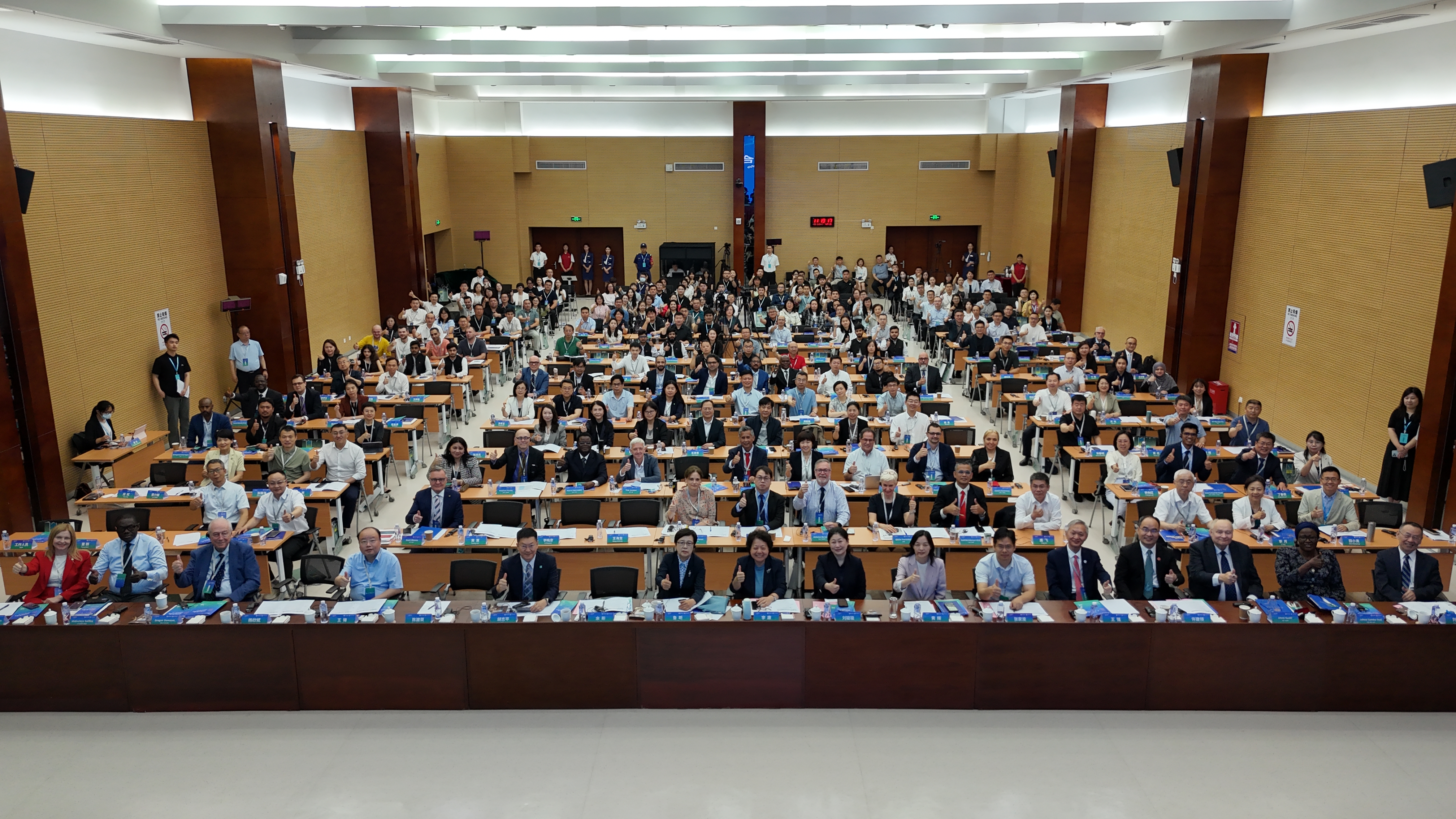
The 2025 Belt and Road Academic Conference on TVET was held in Shenzhen from May 23–24. Centered on the theme "New Responsibilities, New Achievements, New Opportunities", the conference brought together nearly 300 delegates hailing from 52 countries and regions along with representatives from five international organizations. The conference's participants engaged in substantive discussions on strengthening international cooperation in the field of vocational education while building a community with a shared vision for humankind.
The conference featured prominent leaders and experts in the TVET sector. For example, President Lu Xin of the Chinese Society for Technical and Vocational Education, reflected on the accomplishments of the six previous Belt and Road TVET conferences. She emphasized that as Belt and Road initiatives advance into a phase marked by high-quality development, vocational education faces new challenges. Lu outlined four key proposals to spur this stage of development: leveraging TVET as a cultural bridge to facilitate dialogue among diverse civilizations, developing an "AI + Skills" training framework that integrates industrial innovation and promotes global technical standards, utilizing AI to reshape talent development for cross-disciplinary competencies, and accelerating digital transformation by reaching target outcomes outlined in the World Digital Education Conference. Second-Level Inspector of the Department of International Cooperation and Exchange at the Ministry of Education Yu Bin highlighted the significant progress made in vocational education partnerships, while Ge Siying, Deputy Secretary-General of the Chinese National Commission for UNESCO, advocated for enhanced global collaboration in cultivating skilled professionals to drive educational transformation worldwide. Huang Hui, Deputy Director of the Vocational Education Development Center of the Ministry of Education, showcased China's vocational education achievements and collaborative advantages. Lastly, Yang Xinbin, Party Secretary of Shenzhen Polytechnic University, outlined the university's successful international initiatives, underscoring the strategic importance of digital innovation and global partnerships.
 The conference's keynote sessions featured speakers with diverse international perspectives. Xu Jianling, President of Shenzhen Polytechnic University, introduced the university's internationalization experiences, such as establishing the Shenzhen Digital Workshop and the "Shenzhen Agreement" UNESCO offical Abdoulaye Salifou discusses his contributions to the digital transformation of vocational education and the pivotal role of vocational education in Africa. Finnish expert Jouni Koski explored how digital technology can facilitate open innovation in vocational education. Wang Qiang, Vice President of the University of International Business and Economics, articulated how TVET fosters mutual development among Belt and Road countries. Antoine Barnaart, Director of Confucius Institute of Queensland University of Technology, shares the impact of cross-cultural communication on vocational education. Wang Hailong, President of the Tianjin Sino-German University of Applied Sciences, introduced the international cooperation achievements such as the Luban Workshop. Pierre Yourougou, Deputy Director General of Institut National Polytechnique Félix Houphouët-Boigny, Côte d'Ivoire, emphasized the importance of vocational education for the country's economy and shared planning insights. Jahou Samba Faal, Secretary General of the Association of Technical Universities and Polytechnics in Africa, called for strengthened educational partnerships across continents. Zhou Bin, Director of China Calligraphy and Traditional Culture Innovation Center, Renmin University of China, explored how traditional calligraphy nurtures contemporary craftsmanship values. Ulrike Horneber, who serves as Head of Office, Department for Vocational Schools, City of Nuremberg, Germany, provided insights into Germany's Nuremberg vocational system and its economic integration model.
The conference also featured parallel sessions including "Digital Technology Driving Open Sharing"and "Collaborative Development of Industry and Education".
The conference was hosted by the Chinese Society for Technical and Vocational Education and co-organized by Shenzhen Polytechnic University and several other supporting institutions.
The conference's keynote sessions featured speakers with diverse international perspectives. Xu Jianling, President of Shenzhen Polytechnic University, introduced the university's internationalization experiences, such as establishing the Shenzhen Digital Workshop and the "Shenzhen Agreement" UNESCO offical Abdoulaye Salifou discusses his contributions to the digital transformation of vocational education and the pivotal role of vocational education in Africa. Finnish expert Jouni Koski explored how digital technology can facilitate open innovation in vocational education. Wang Qiang, Vice President of the University of International Business and Economics, articulated how TVET fosters mutual development among Belt and Road countries. Antoine Barnaart, Director of Confucius Institute of Queensland University of Technology, shares the impact of cross-cultural communication on vocational education. Wang Hailong, President of the Tianjin Sino-German University of Applied Sciences, introduced the international cooperation achievements such as the Luban Workshop. Pierre Yourougou, Deputy Director General of Institut National Polytechnique Félix Houphouët-Boigny, Côte d'Ivoire, emphasized the importance of vocational education for the country's economy and shared planning insights. Jahou Samba Faal, Secretary General of the Association of Technical Universities and Polytechnics in Africa, called for strengthened educational partnerships across continents. Zhou Bin, Director of China Calligraphy and Traditional Culture Innovation Center, Renmin University of China, explored how traditional calligraphy nurtures contemporary craftsmanship values. Ulrike Horneber, who serves as Head of Office, Department for Vocational Schools, City of Nuremberg, Germany, provided insights into Germany's Nuremberg vocational system and its economic integration model.
The conference also featured parallel sessions including "Digital Technology Driving Open Sharing"and "Collaborative Development of Industry and Education".
The conference was hosted by the Chinese Society for Technical and Vocational Education and co-organized by Shenzhen Polytechnic University and several other supporting institutions.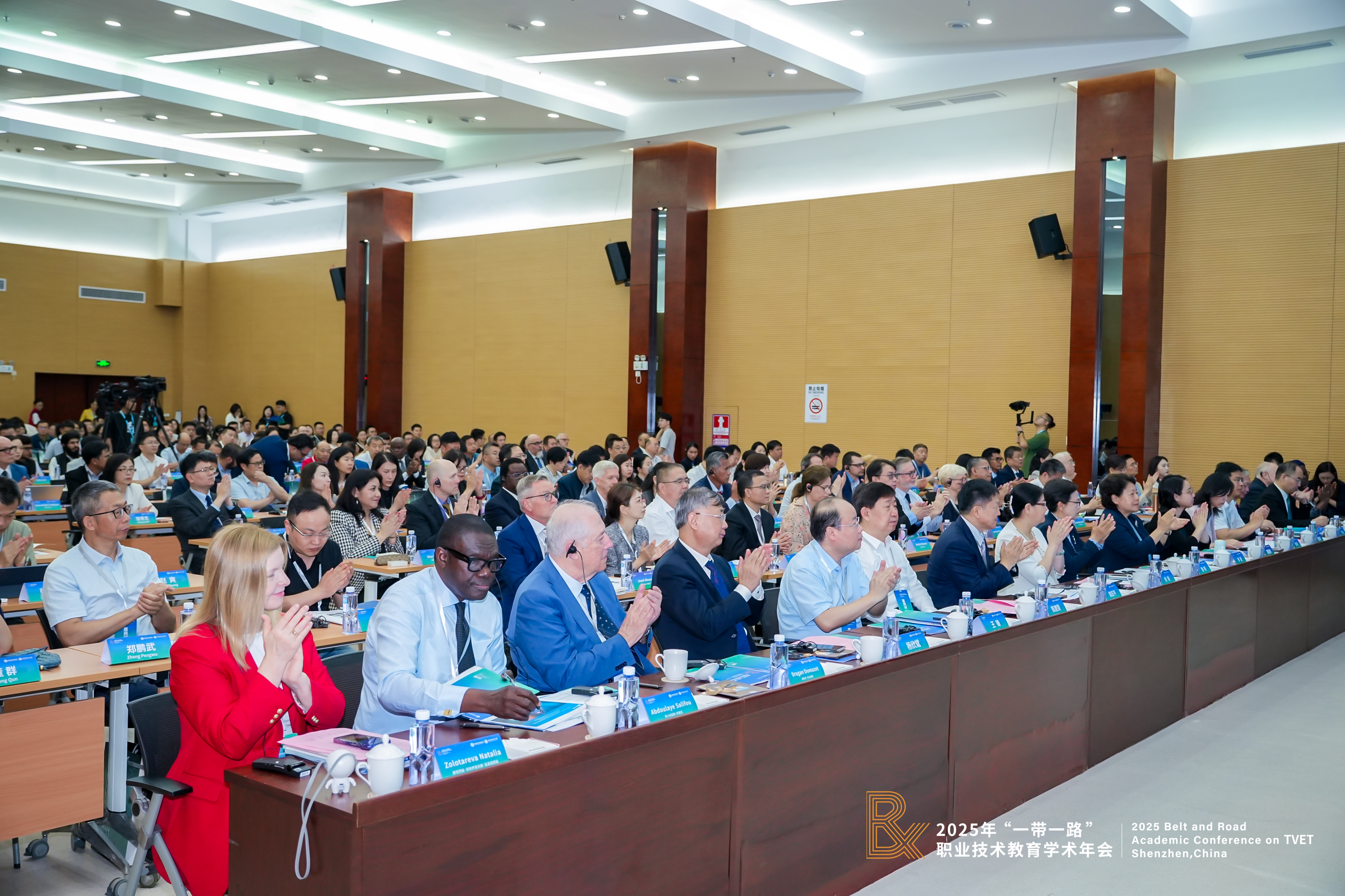
The conference's keynote sessions featured speakers with diverse international perspectives. Xu Jianling, President of Shenzhen Polytechnic University, introduced the university's internationalization experiences, such as establishing the Shenzhen Digital Workshop and the "Shenzhen Agreement" UNESCO offical Abdoulaye Salifou discusses his contributions to the digital transformation of vocational education and the pivotal role of vocational education in Africa. Finnish expert Jouni Koski explored how digital technology can facilitate open innovation in vocational education. Wang Qiang, Vice President of the University of International Business and Economics, articulated how TVET fosters mutual development among Belt and Road countries. Antoine Barnaart, Director of Confucius Institute of Queensland University of Technology, shares the impact of cross-cultural communication on vocational education. Wang Hailong, President of the Tianjin Sino-German University of Applied Sciences, introduced the international cooperation achievements such as the Luban Workshop. Pierre Yourougou, Deputy Director General of Institut National Polytechnique Félix Houphouët-Boigny, Côte d'Ivoire, emphasized the importance of vocational education for the country's economy and shared planning insights. Jahou Samba Faal, Secretary General of the Association of Technical Universities and Polytechnics in Africa, called for strengthened educational partnerships across continents. Zhou Bin, Director of China Calligraphy and Traditional Culture Innovation Center, Renmin University of China, explored how traditional calligraphy nurtures contemporary craftsmanship values. Ulrike Horneber, who serves as Head of Office, Department for Vocational Schools, City of Nuremberg, Germany, provided insights into Germany's Nuremberg vocational system and its economic integration model.
The conference also featured parallel sessions including "Digital Technology Driving Open Sharing"and "Collaborative Development of Industry and Education".
The conference was hosted by the Chinese Society for Technical and Vocational Education and co-organized by Shenzhen Polytechnic University and several other supporting institutions.
(Source: the Chinese Society for Technical and Vocational Education)